

The Haunted Codebase kept rattling code nobody could explain. Then you called in the Code Mappers, and they mapped what is really in there. You stayed in charge. Now, the plan.
You know what you have, it is safe, and someone competent owns the upkeep.
Three steps, in plain words. Your team stays in charge the whole way.
The plan
Three steps. Start with one.

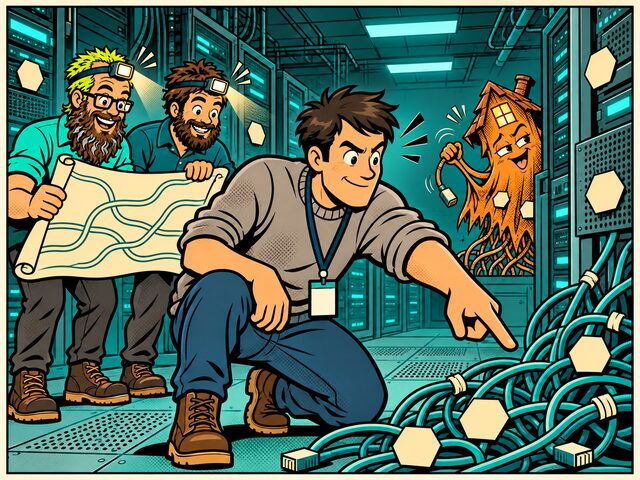 1
We check it and tell you plainly what is wrong
A plain-words map before any change: what you have, what it does, where the risk sits.
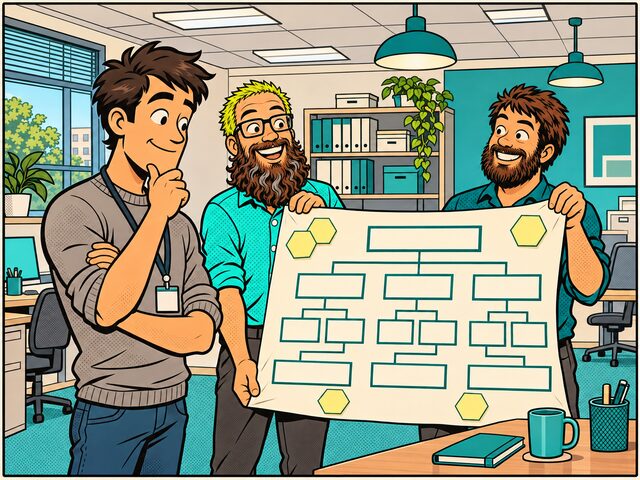 2
We secure and stabilize what matters first
Starting with whatever could hurt you most.
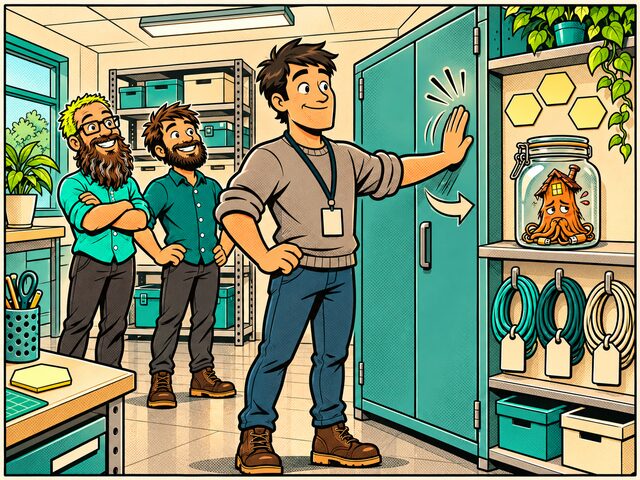 3
We keep it running, and hand over what we learn when you want it
Upkeep is a monthly fee: security, fixes, small changes and backups.
What we promise
- You call the shots.Your team keeps the priorities and the decisions.
- No surprises.Nothing starts until you have signed off on a written job spec and its price.
- Every change checked.A principal engineer reviews every change. Tests and security checks run before you see it.
IN BUILD - Nothing hidden.You can see every piece of work and who holds it.
STATED - In writing.Each legal question gets a written answer before you sign.
TO BE WRITTEN
Questions you will have
Why not just rewrite it?
The map comes first, before any change.A rewrite throws away what works and repeats what nobody wrote down.
What does it cost?
A written price before anything starts.Your plan arrives with a price, by email, before anything starts. Leadership is a set number of days each month. Engineering is a written job spec for the build, then a monthly fee for upkeep: security, fixes, small changes and backups. New features are priced separately. Outside services the system uses, such as phone, messaging or AI services, are paid by you.
What about my team?
They stay in charge.Your team keeps the priorities and the decisions. We work beside them and answer to you; we are not here to replace anyone. At handover Level 1 they read and audit the code and approve changes before anything ships.
What will legal ask?
Three questions, answered in writing.Three questions come up most: who answers if it breaks, who owns the code and the data, and what AI tools may see. Each gets a written answer before you sign. Where one is not written yet, this site says so.
Three jobs to look at
Real jobs you can look at, each with its own case. Custom software, fractional leadership and advisory in one package.
Nairobi
Rebuilt Nairobi Control from scratch with a fully custom interface, keeping its link to the firmware unchanged; control of one Nairobi or a whole group at once over Bluetooth Mesh; wireless firmware updates through a private, verified update service; a test harness that runs the real firmware code beside the app; and automated build, security and release pipelines.
Read the caseKentucky College of Art + Design
One admissions portal for staff with single sign-on and role-based access, merging each applicant into a single record, with built-in document signing, approval routing that produces documents such as award letters, and student-privacy controls that log every time a record is opened; a student portal with secure link sign-in where each student sees their whole checklist and timeline; a scheduling app that replaces Calendly; texting, custom email, notifications and alerts; and custom integrations with the systems they already use.
Read the caseFirst Class Ops
A suite of 27 online tools with bundles, checkout through Stripe and a custom payment integration, a customer portal and an admin console; sign-up from an ad straight into the suite; CRM tags for new, cancelled and returning customers; and a usage page that shows which customers are drifting away.
Read the case- TypeScript85
- React75
- lefthook69
- Tailwind CSS66
- PostgreSQL56
- Zod49
- JavaScript45
- Vitest44
- Next.js42
- Drizzle ORM38